Loading store
Loading store
WishlistStore FinderGift Cards

Charcoal BBQs explained

Charcoal BBQs are about heat, smoke and hands-on control. If you've only cooked on gas, charcoal might seem complicated but we're here to assure you, it's not. You use charcoal as the heat source, control the temperature with the vents and coal layout, and get that distinctive fire-cooked flavour charcoal is known for. This guide covers how it works, the different styles, what the fuel actually is, and what to look for when you buy.
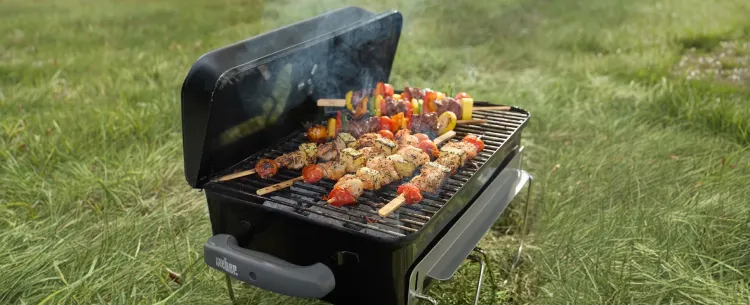
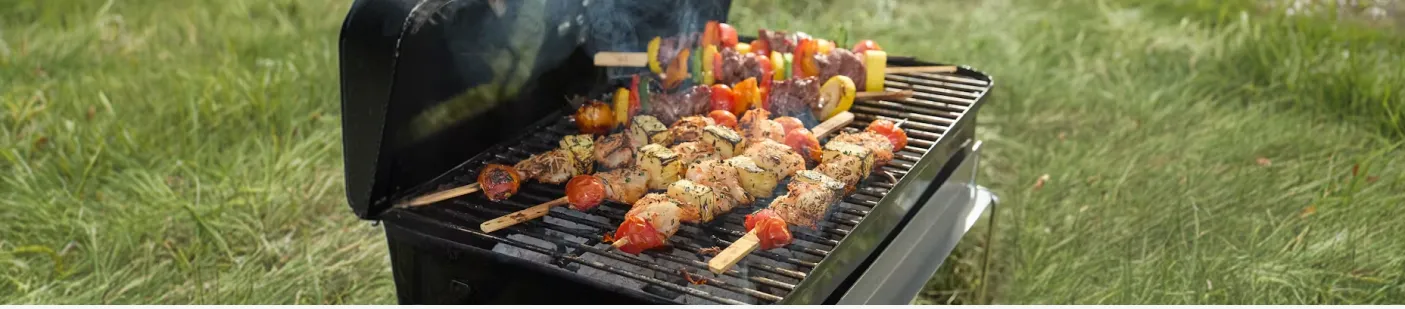
Is a charcoal BBQ right for me?

Charcoal BBQs are a great choice if you enjoy hands-on cooking, want real fire flavour and do not mind learning the basics of lighting and managing heat.

Choose a charcoal BBQ if

You want real fire cooking, genuine smoke flavour and the satisfaction of managing your own heat. Charcoal is ideal for grilling, low and slow smoking, searing and full roasts when you enjoy the process as much as the result.

Think twice if

You want the fastest, lowest fuss option for weeknight meals. Gas may suit you better if speed and simple dial control matter most. Pellet may suit you better if you want low and slow cooking with easier temperature control.

You'll need

A safe outdoor cooking spot, charcoal or briquettes, natural firelighters, a long-nose lighter, a chimney starter, heat-resistant tools and a way to dispose of cooled ash safely.

What is a charcoal BBQ, and how is it different?

A gas BBQ uses gas burners for heat. You turn a dial, hit the ignition and can be cooking in a few minutes.

A charcoal BBQ uses burning charcoal as the heat source. That changes the flavour and the way you cook. Charcoal can burn very hot, which is great for searing steaks, chops and burgers. It naturally creates fire-cooked flavour, while a gas BBQ generally needs a smoker box or smoking wood to add wood smoke.

The trade off is time and a little extra clean up. Charcoal usually takes around 15 to 20 minutes to get ready with a chimney starter, and you will need to empty the ash once it has cooled. For many BBQ fans, the flavour and hands-on cooking experience are well worth it.
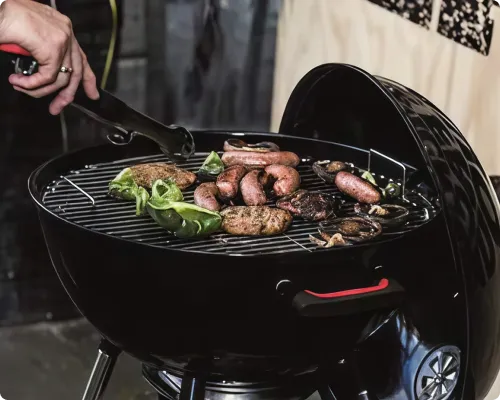
Charcoal BBQ content image

How does a charcoal BBQ work?

A charcoal BBQ works by balancing three things: fuel, heat and airflow.

Charcoal is the fuel. Once it is lit, the coals create heat. The vents control how much oxygen reaches the fire. More airflow means a hotter fire. Less airflow slows the fire down.

You also control the heat by where you place the coals. Spread them evenly for fast direct cooking, move them to one side for a hot zone and cooler zone, or place them around the edges for indirect cooking with the lid down.

Charcoal BBQ
Gas BBQ
Pellet grill
Heat source
Charcoal or briquettes
Gas burners
Compressed wood pellets
Smoke flavour
Distinctive fire-cooked flavour
Mild without smoking wood
Wood smoke flavour, usually mild to medium
Temperature control
Manual via vents and coal layout
Easy via knobs
Digital controller
Typical warm-up time
15 to 25 minutes
5 to 10 minutes
Typically 10 to 20 minutes
Fuel used
Charcoal or briquettes
LPG or natural gas
BBQ wood pellets
Best for
Flavour, searing, smoking
Convenience and quick cooks
Low and slow with smoke
Charcoal BBQ
Heat source
Charcoal or briquettes
Smoke flavour
Distinctive fire-cooked flavour
Temperature control
Manual via vents and coal layout
Typical warm-up time
15 to 25 minutes
Fuel used
Charcoal or briquettes
Best for
Flavour, searing, smoking
Gas BBQ
Heat source
Gas burners
Smoke flavour
Mild without smoking wood
Temperature control
Easy via knobs
Typical warm-up time
5 to 10 minutes
Fuel used
LPG or natural gas
Best for
Convenience and quick cooks
Pellet grill
Heat source
Compressed wood pellets
Smoke flavour
Wood smoke flavour, usually mild to medium
Temperature control
Digital controller
Typical warm-up time
Typically 10 to 20 minutes
Fuel used
BBQ wood pellets
Best for
Low and slow with smoke

The main styles of charcoal BBQ

There are several types of charcoal BBQ available, each with different strengths. Knowing which style suits you helps narrow down your options.
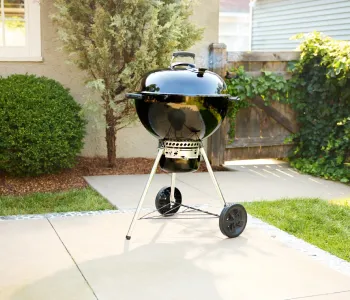
Kettle BBQ image

Kettle BBQ

Round bowl with a lid. One of the most widely recognised charcoal BBQ styles, with plenty of flexibility for grilling, smoking and indirect cooking.

Best for: Beginners and all-round cooks.
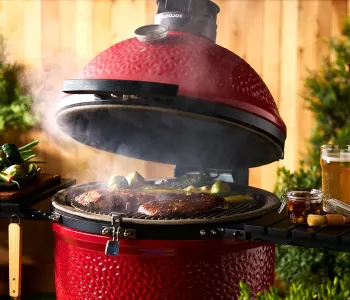
Kamado image

Kamado

Egg-shaped ceramic or insulated steel cooker with excellent heat retention and efficient fuel use. Once you learn the vent settings, it can hold steady temperatures for long cooks.

Best for: Keen cooks who want to sear, roast, smoke and bake on one BBQ.
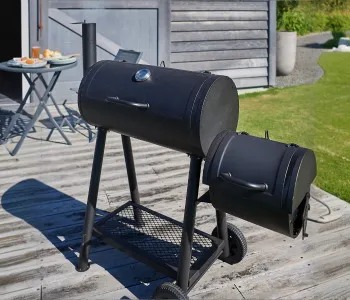
Offset smoker image

Offset smoker

Long horizontal cooking chamber with a separate firebox to the side. Heat and smoke are drawn across the meat rather than sitting directly underneath it.

Best for: Those focused on serious low and slow BBQ and large cuts, and happy to actively manage the fire.
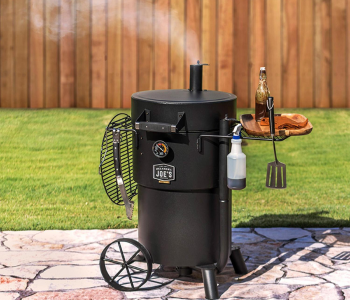
Offset smoker image

Drum smoker

Upright barrel with charcoal in the base and food cooked above on hooks or grates. The compact shape and controlled airflow can help it hold steady heat during longer cooks.

Best for: Low and slow cooks who want a compact smoker with less fire management than an offset smoker.
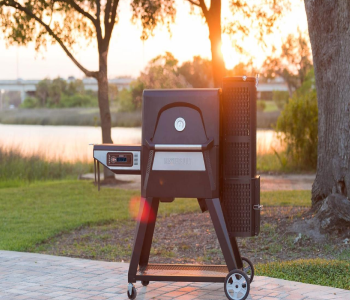
Offset smoker image

Gravity fed charcoal smoker

Charcoal sits in a tall hopper and feeds down as it burns. A powered fan and digital controller manage airflow to help hold your selected temperature.

Best for: Those who want charcoal flavour with digital temperature control and less hands-on fire management.
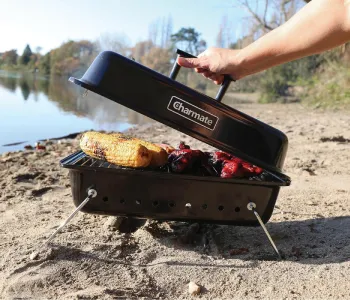
Portable charcoal BBQ image

Portable charcoal BBQ

Small and lightweight. Great for camping, the bach or smaller outdoor spaces where charcoal BBQs are permitted. Always check local fire restrictions, campsite rules and required clearances before lighting.

Best for: Couples or people with limited outdoor space.

Lump charcoal or briquettes?

Both work well, but they behave differently. Lump charcoal generally lights faster and can reach higher temperatures. Briquettes usually burn longer and provide steadier heat, which can make them easier to manage for longer cooks.

Lump charcoal
Briquettes
Burn time
Usually shorter burn with strong heat
Usually longer and steadier
Temperature
Can reach higher peak heat
Easier to hold at a steady temperature
Smoke
Wood character varies by product
Usually more neutral on their own
Best for
Hot and fast grilling, searing
Long cooks, low and slow, beginners
Good to know
Irregular pieces and may spark when lighting
Ingredients vary, so check the packet
Lump charcoal
Burn time
Usually shorter burn with strong heat
Temperature
Can reach higher peak heat
Smoke
Wood character varies by product
Best for
Hot and fast grilling, searing
Good to know
Irregular pieces and may spark when lighting
Briquettes
Burn time
Usually longer and steadier
Temperature
Easier to hold at a steady temperature
Smoke
Usually more neutral on their own
Best for
Long cooks, low and slow, beginners
Good to know
Ingredients vary, so check the packet

How do I light a charcoal BBQ?

The easiest and cleanest way to light charcoal is with a chimney starter. It doesn't need lighter fluid and gets charcoal ready in around 15 to 20 minutes. A long-nose lighter makes it easy to light the firelighters underneath without getting your hand close to the flame.

1

Fill the chimney

Fill the chimney with the amount of charcoal or briquettes needed for your cook. Use more for a larger or hotter fire and less for a smaller cook.

2

Add firelighters

Place the recommended number of natural firelighters underneath the chimney and light them. Two to three is usually enough, but check the firelighter instructions.

3

Wait

The coals should begin catching within a few minutes and are often ready in around 15 to 20 minutes.

4

Pour the coals

Once the fuel is burning strongly and beginning to ash over, carefully pour it into the BBQ.

5

Arrange and cook

Set up your coal layout, replace the grate and let it heat for 5 minutes.

How do I know when charcoal is ready?

Briquettes are generally ready when they are glowing and mostly covered with a light layer of grey ash. Lump charcoal is usually ready once most pieces are burning strongly and the edges have begun to ash over. This often takes around 15 to 20 minutes with a chimney starter. You'll feel strong radiant heat from a safe distance. Use a grill thermometer if you want a more accurate read.

Still lighting

Coals catching

Leave a little longer

Almost ready

Glow building

Ash beginning to form

Ready to cook

Glowing and ashing over

Most of the fuel is burning strongly

High heat

Strong radiant heat

Arrange the coals for searing or direct grilling

Tip icon
Tip: A chimney starter and natural firelighters are usually the cleanest and easiest way to light charcoal without adding unwanted odour. Never add lighter fluid to hot or burning coals.

What can I cook on a charcoal BBQ?

Charcoal BBQs are best known for grilling, but they can smoke, roast and bake too. The setup depends on how you arrange the coals.

Direct grilling

Sausages, burgers, steaks, chops, fish, chicken pieces, corn, halloumi and vegetables over hot coals for flavour and char.

Indirect roasting

Whole chicken, leg of lamb, pork shoulder and larger cuts placed away from the coals with the lid on. Works like an outdoor oven.

Low and slow smoking

Brisket, pork ribs and pork shoulder at low heat over several hours. Add wood chunks to charcoal for extra smoke flavour.

What size charcoal BBQ do I need?

Round charcoal BBQs like kettles and kamados are measured by their cooking grate diameter. A larger grate gives you more room for two-zone cooking and bigger cuts of meat. Capacity also depends on what you are cooking and how much of the grate you need to leave clear for indirect heat.

Compact, up to 47cm

Best for: Couples and smaller families or limited outdoor space.

Good to know: Easier to move and store, but limited room for two-zone cooking.

Mid size, 47 to 57cm

Best for: Most households, families and regular entertainers.

Good to know: A good all-round size with room for two-zone cooking and a roast.

Entertainer, 57cm plus

Best for: Larger families, regular hosting and bigger cuts.

Good to know: More cooking space and room for larger cuts, but it takes up more storage room and may need more fuel when the full cooking area is used.

Offset, drum and gravity fed

Best for: Those planning regular low and slow cooks or feeding a crowd.

Good to know: These aren't sized by diameter. Check the total cooking area or number of racks instead, based on how much you plan to cook at once.

What should I look for when buying a charcoal BBQ?

  • Adjustable top and bottom vents so you can control airflow and heat
  • A well-fitting lid that holds heat and smoke in for roasting, smoking and indirect cooking
  • A lid thermometer or probe port to help keep an eye on BBQ temperature
  • Solid materials such as porcelain enamel, thick steel or ceramic for better heat control and durability
  • Easy ash clean-out to make clean up simpler and safer once ash has cooled
  • A stable base and sturdy legs to keep the BBQ secure while cooking
  • Available parts and warranty support to make it easier to maintain your BBQ over time

What should I buy with a charcoal BBQ?

A few extras will make charcoal cooking easier, safer and more enjoyable from the first cook.

Item
Why it helps
Lump charcoal or briquettes
Your main fuel. Choose based on the cooking style you want.
Chimney starter
The easiest way to light charcoal evenly without lighter fluid.
Natural firelighters
Helps start the coals cleanly without affecting flavour. Use the amount recommended on the firelighter pack.
Long nose lighter
Lights firelighters safely, keeping your hand well away from the flame.
Heat resistant gloves
Helps protect your hands when handling hot cooking tools and BBQ parts.
Long handled tongs and tools
Keeps your hands further from the heat.
Meat thermometer
Helps you cook safely and avoid guessing.
Ash bucket or metal container
Gives completely cooled ash somewhere non-combustible to sit before final disposal.
BBQ cover
Helps protect your BBQ from the elements.
Lump charcoal or briquettes
Your main fuel. Choose based on the cooking style you want.
Chimney starter
The easiest way to light charcoal evenly without lighter fluid.
Natural firelighters
Helps start the coals cleanly without affecting flavour. Use the amount recommended on the firelighter pack.
Long nose lighter
Lights firelighters safely, keeping your hand well away from the flame.
Heat resistant gloves
Helps protect your hands when handling hot cooking tools and BBQ parts.
Long handled tongs and tools
Keeps your hands further from the heat.
Meat thermometer
Helps you cook safely and avoid guessing.
Ash bucket or metal container
Gives completely cooled ash somewhere non-combustible to sit before final disposal.
BBQ cover
Helps protect your BBQ from the elements.

How do I clean and care for a charcoal BBQ?

Good care keeps your BBQ cooking well and helps it last longer.

When
What to do
After each cook
Clean the grate while it is still warm enough to loosen residue, using a brush or scraper suitable for the grate material. Let the BBQ cool fully before covering.
Once ash is completely cold
Transfer completely cooled ash to a metal container with a lid and keep it outside, away from anything that could catch fire, before final disposal.
Every few cooks
Check the vents, clean out ash build-up and wipe down surfaces.
Seasonally
Inspect for rust, check handles and wheels, refresh tools and replace worn accessories.
After each cook
Clean the grate while it is still warm enough to loosen residue, using a brush or scraper suitable for the grate material. Let the BBQ cool fully before covering.
Once ash is completely cold
Transfer completely cooled ash to a metal container with a lid and keep it outside, away from anything that could catch fire, before final disposal.
Every few cooks
Check the vents, clean out ash build-up and wipe down surfaces.
Seasonally
Inspect for rust, check handles and wheels, refresh tools and replace worn accessories.
Tip icon
Tip: Never put hot ash into a plastic bin or rubbish bag. Ash can stay hot for longer than you might expect, so let it cool completely before disposing of it.
For the full routine, see our BBQ care and cleaning guide

Ready to choose your charcoal BBQ?

Start with a kettle BBQ if you want the easiest all-round charcoal option. Choose a kamado if you want excellent heat control and a BBQ that can sear, roast, smoke and bake. Look at portable charcoal BBQs if you need something compact for the bach, camping or a smaller outdoor space.

FAQs

No. Charcoal takes a little more practice than gas, but the basics are simple once you understand lighting, airflow and coal placement. Start with a chimney starter, use briquettes for steady heat and begin with easy cooks like sausages, burgers, chicken pieces or skewers.
Charcoal usually takes around 15 to 20 minutes to get ready with a chimney starter, depending on the fuel and weather. Briquettes are generally ready when they are glowing and mostly covered in light grey ash. Lump charcoal is ready once most pieces are burning strongly and beginning to ash over.
Yes. You can add more charcoal during a longer cook if the heat begins to drop. Add small amounts carefully using long-handled tools and heat-resistant gloves. Check the fuel instructions, as some products need to be fully lit before they are added near food.
Most charcoal BBQs can be stored outside if they are cool, dry, covered and looked after. Use a fitted BBQ cover, empty cold ash regularly and check for rust or wear, especially if you live in a coastal or humid area. Store charcoal separately in a dry, sealed container or bag.
Let the coals and ash cool completely before removing them. Once cold, empty the ash into a metal container and dispose of it safely. Never put warm ash into a plastic bin, rubbish bag or compost, as ash can stay hot for longer than you might expect.
Yes, but take extra care. Set up in a sheltered, open and well ventilated area, and keep the BBQ away from walls, fences, furniture and anything flammable. Wind can make charcoal burn hotter or make temperature harder to control, so keep an eye on the vents and allow extra time if the weather is cold or wet.
It is best to avoid lighter fluid if you want cleaner flavour. It can leave an unwanted taste on food if it is not used properly. A chimney starter with natural firelighters is usually easier, cleaner and more reliable. Never add lighter fluid to hot or burning coals.
A kettle BBQ is usually the best place to start. It is versatile, simple to use and works well for direct grilling, two-zone cooking, roasting and low and slow cooking once you build confidence. Look for adjustable vents, a well-fitting lid, easy ash clean-out and enough cooking space for the way you like to cook.