Loading store
Loading store
WishlistStore FinderGift Cards

Everything you need to know about wooden sheds

Wooden sheds are one of the most popular choices for New Zealand homeowners who want a garden shed that looks at home in an outdoor setting. Timber blends naturally into a garden environment, can be painted or stained to match the house exterior, and provides a warmer, more traditional aesthetic than steel or plastic alternatives. This guide covers the main types of wooden sheds available, what to consider before buying, how to maintain a timber shed, and where to find wooden sheds for sale in New Zealand.
Key takeaways

  • Wooden sheds suit visible garden positions where appearance and integration with the landscape are priorities.
  • Cedar sheds are more durable and moisture-resistant than treated pine, suiting exposed or high-humidity sites.
  • A well-maintained wooden shed built from treated timber can last twenty years or more in New Zealand conditions. Consistent maintenance is the key factor.
  • Timber is not suited to coastal properties where salt air and high humidity accelerate decay. Consider steel or plastic sheds for those locations instead.

Why choose a wooden shed?

A wooden shed suits situations where appearance, customisation, and integration with the garden are priorities. Timber is a natural insulator, which means the interior of a wooden shed stays more temperate than a steel equivalent in both summer and winter.

  • Wooden sheds suit visible garden positions where appearance and integration with the landscape matter.
  • Timber provides natural insulation, keeping the interior more stable in temperature than steel.
  • Internal modifications including shelving and hooks are straightforward on a timber structure.
  • Wooden sheds require painting or staining every three to five years to stay weatherproof.
  • Timber is not suited to coastal properties where salt air and high humidity accelerate decay.

Wooden vs steel sheds: which is better?

Wooden sheds and steel sheds suit different situations rather than one being better than the other across the board. Wooden sheds suit visible garden positions where appearance matters, provide better natural insulation, and are easier to modify internally. Steel sheds require less maintenance, are more resistant to impact damage, and are generally more affordable at the same size.

Why choose a wooden shed for your garden

Types of wooden sheds available in New Zealand

Wooden sheds in New Zealand fall into two main categories: kit set timber sheds designed for homeowner assembly, and custom-built timber structures constructed on site by a builder or shed specialist. Kit set timber sheds are the most accessible option for most homeowners and are available in a range of standard sizes from hardware and home improvement retailers across New Zealand.

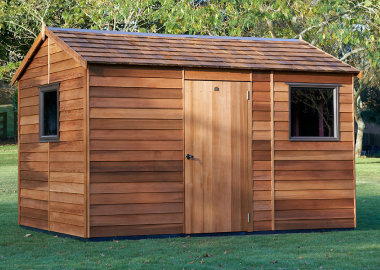
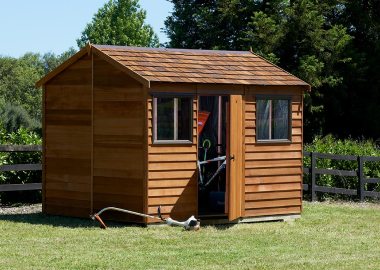
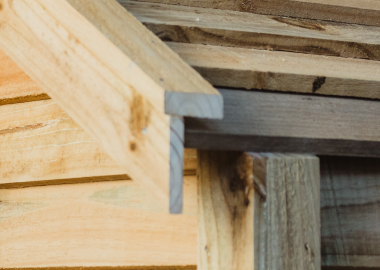
Kit set wooden sheds typically use treated pine or cedar framing with either tongue-and-groove or shiplap timber cladding. Cedar is a naturally durable timber that resists moisture and decay without requiring chemical treatment. It is a premium option compared to treated pine and is better suited to exposed or high-humidity garden settings. Cedar sheds are typically more expensive than treated pine equivalents but require less frequent maintenance to stay in good condition.

Types of wooden sheds available in New Zealand

What size wooden shed do I need?

The right size wooden shed depends on what you plan to store and how much section space you have available. The most commonly purchased garden shed size for a residential New Zealand section is 1.8 metres wide by 2.4 metres deep. This footprint provides enough floor area for a lawnmower, hand tools, potting supplies, and general garden storage without taking up a disproportionate amount of the section.

Measure your available space carefully before purchasing and account for the clearance needed around all sides of the shed. A clearance of at least 600mm on each side allows access for painting and maintenance and ensures adequate ventilation around the structure. Fitting a shed too tightly against a fence or wall restricts airflow and accelerates deterioration of the timber on the less accessible sides.

  • 1.8m x 2.4m suits a lawnmower, hand tools, and general garden storage for most sections.
  • 2.4m x 3.0m suits a shed that doubles as a potting shed or hobby space with a workbench.
  • Allow at least 600mm clearance on all sides for maintenance access and ventilation.
  • Consider window placement and shed orientation when choosing a size for a workspace shed.

How to maintain a wooden shed in New Zealand

Regular maintenance is what separates a wooden shed that lasts twenty years from one that deteriorates within five. The maintenance requirements for a timber shed are straightforward but need to be carried out on a consistent schedule to be effective. In New Zealand conditions, a wooden shed should be inspected and treated every three to five years as a minimum.

  • Paint or stain is the primary protection for the timber cladding and framing. Inspect and repaint or restain the shed exterior every three to five years.
  • Clean the surface before repainting to remove mould, algae, and accumulated dirt.
  • Sand back cracked or peeling paint before applying a new coat for a clean, lasting finish.
  • Check the roof covering annually and replace it promptly if cracking or lifting is visible.
  • Clear gutters and check that water drains away from the shed base to prevent ground moisture buildup.
  • Check timber at ground level for early signs of rot and treat affected areas before the damage spreads.

Mitre 10 stocks exterior paints, timber stains, wood preservatives, and roofing materials suited to wooden shed maintenance.

Sizing and maintaining a wooden shed in New Zealand

Frequently asked questions

Are wooden sheds better than steel sheds?

Wooden sheds and steel sheds suit different situations rather than one being better than the other across the board. Wooden sheds suit visible garden positions where appearance matters, provide better natural insulation, and are easier to modify internally. Steel sheds require less maintenance, are more resistant to impact damage, and are generally more affordable at the same size.

How long does a wooden shed last in New Zealand?

A well-maintained wooden shed built from treated timber can last twenty years or more in New Zealand conditions. The key factor is consistent maintenance. A shed that is painted or stained on schedule, has its roof covering checked annually, and is built on a solid base that keeps the timber off the ground will outlast one that is neglected within a few seasons. Cedar sheds generally last longer than treated pine equivalents with equivalent levels of maintenance.

Do wooden sheds need a building consent in New Zealand?

Most single-storey wooden sheds with a floor area under 10 square metres are exempt from building consent requirements under the Building Act 2004, provided they are not used for habitation and meet the property setback requirements. Rules vary by council and zone, so confirm the requirements with your local council before purchasing and installing a shed. Larger timber structures or those positioned close to a boundary are more likely to require consent.

What timber treatment do I need for a garden shed in New Zealand?

Framing timber used in a garden shed should be rated to at least H3 treatment for above-ground outdoor use in New Zealand conditions. H3-treated timber resists moisture, insects, and decay without requiring additional chemical treatment. Any timber in contact with the ground or concrete, such as bearer frames and bottom plates, should be rated to H4 treatment, which provides a higher level of protection against ground moisture and soil contact. Check timber treatment grades before purchasing framing materials for a custom timber shed build.

Where can I buy wooden sheds for sale in New Zealand?

Mitre 10 stocks wooden shed kits and timber storage sheds in a range of standard sizes, available in-store and online across New Zealand. Click and Collect is available from your local store, and delivery is available for online orders.

Wooden shed frequently asked questions