Loading store
Loading store
WishlistStore FinderGift Cards

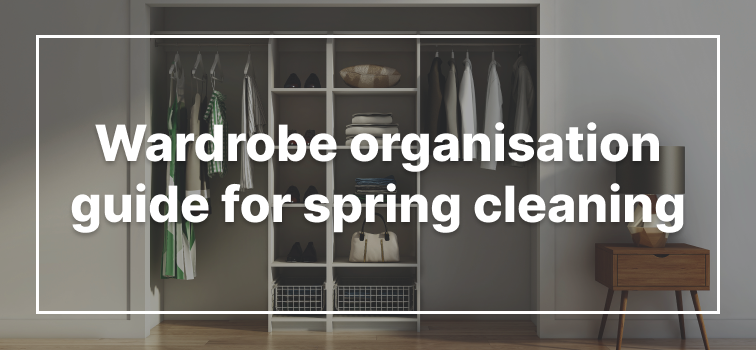
Wardrobe organisation guide for spring cleaning

Spring is the most practical time to tackle your wardrobe. Seasonal change gives you a clear reason to sort through what you own, remove what you no longer wear, and set up a storage system that makes getting dressed easier every day.

Whether you are working with a built-in wardrobe, a freestanding unit, or a walk-in wardrobe, the principles for getting organised are the same. This guide covers how to organise your wardrobe from start to finish, what storage products help, and what wardrobe installation involves if you are ready to upgrade your setup.

Key takeaways

  • Take everything out of the wardrobe before starting. Seeing the full volume of what you own makes decisions clearer and reveals space you did not know you had.
  • Group clothing by category before returning it to the wardrobe. Everything needs a dedicated zone, not just a space where it currently fits.
  • Lidded storage boxes on high shelves are the most practical solution for seasonal clothing, keeping it dust-free and clearly separated from everyday wear.
  • The one-in-one-out habit is the most reliable way to maintain wardrobe organisation after a clean-out.

How to organise your wardrobe step by step

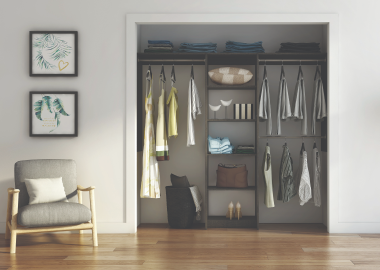
  1. Start by taking everything out of the wardrobe completely. This gives you a clear view of the space you are working with and forces a decision on every item rather than leaving things in place by default.
  2. Sort everything into four groups: keep, donate, store elsewhere, and discard. Be honest about what you actually wear. If an item has not been worn in twelve months, it is unlikely to be worn in the next twelve.
  3. Once you have reduced the volume of clothing and items going back in, group what remains by category before returning anything to the wardrobe. Common categories for most wardrobes include everyday clothing, workwear, occasion wear, active and sportswear, and accessories. Grouping by category means everything has a dedicated zone and you always know where to look first.
  4. Return items to the wardrobe with the most frequently used categories at the most accessible positions. Everyday clothing belongs at eye level on the main hanging rail or on the most accessible shelves. Occasion wear, seasonal items, and less frequently used clothing can move to higher shelves, lower sections, or storage boxes.
  5. Hang items that crease easily including dress shirts, blouses, trousers, and jackets.
  6. Fold knitwear, t-shirts, and casual tops to avoid stretching from hangers.
  7. Store shoes at floor level on a shoe rack or in clear boxes so pairs stay together.
  8. Use shelf dividers to keep folded stacks upright and separated by category.
  9. Store accessories including belts, scarves, and bags in baskets or on hooks inside the wardrobe door.
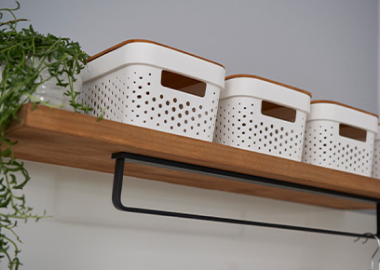
  10. Place seasonal clothing in lidded storage boxes on high shelves to free up prime wardrobe space.
How to organise your wardrobe step by step

Wardrobe storage products that make organisation easier

The right storage products do the work of keeping your wardrobe organised between clean-outs. Without them, categories collapse into each other, and the wardrobe reverts to clutter within weeks. The products that make the most difference are those that define clear zones and make the most of the vertical space inside the wardrobe.

  • Shelf organisers and drawer inserts divide shelves into sections so folded clothing stays in neat stacks rather than tipping into a pile.
  • Storage boxes and lidded bins on upper shelves keep seasonal items dust-free and clearly separated from everyday clothing.
  • Clear storage boxes make it easy to identify contents without pulling everything down.
  • Slim hangers free up significant rail space compared to standard plastic hangers.
  • Shelf dividers keep folded stacks separated and upright.
Wardrobe storage products for spring cleaning

How to make the most of a small wardrobe

A small wardrobe requires more deliberate organisation than a larger one because there is less room to absorb clutter. The most effective approach is to maximise every tier of available height rather than relying solely on the main hanging rail and a single shelf above it.

  • Double hanging rails are one of the most practical upgrades for a small wardrobe.
  • Folding more items and hanging fewer is another straightforward way to increase capacity.
  • Fit a second hanging rail beneath the main one for shorter hanging items.
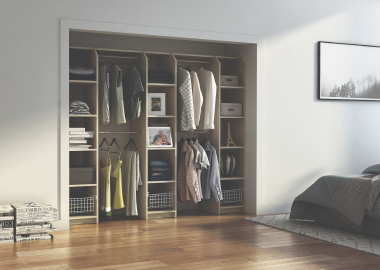
  • Use the full height of the wardrobe with shelving up to the top for folded items and storage boxes.
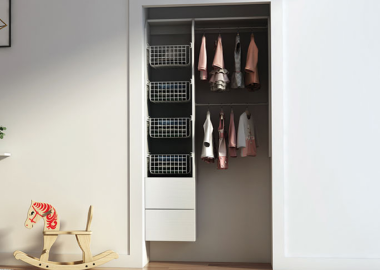
  • Use vertical drawer inserts to organise folded items on shelves rather than stacking flat.
  • Keep only the current season in the wardrobe and store off-season clothing elsewhere.
How to make the most of a small wardrobe

How much is wardrobe installation in New Zealand?

Wardrobe installation costs in New Zealand vary depending on the type of system you choose, the size of the space, and whether you are fitting a kitset system yourself or having a custom wardrobe designed and installed by a professional.

  • Kitset wardrobe systems: $200 to $600 for components, homeowner installation.
  • Mid-range modular systems: $600 to $1,500 installed, more configuration options.
  • Custom built-in wardrobes: from $2,000, professionally designed and installed.

Frequently asked questions

How do I organise my wardrobe if I do not have enough space?

Start by reducing the volume of clothing going back into the wardrobe through a thorough sort. Store off-season clothing in lidded boxes elsewhere and focus the wardrobe on current-season items only.

What is the best way to store seasonal clothing?

Lidded storage boxes on high wardrobe shelves are the most practical solution for seasonal clothing. Clear boxes make it easy to identify contents without pulling everything down. Vacuum storage bags reduce the volume of bulky items such as winter knitwear and duvets significantly, which can free up a full shelf. Label each box or bag with the season and category so the contents are easy to identify when the season changes.

How do I keep my wardrobe organised after a clean-out?

The most reliable way to maintain wardrobe organisation is to apply a one-in-one-out approach. When a new item comes in, an old item leaves. Return clothing to its designated category every time rather than placing items wherever there is space. A quick weekly tidy of ten minutes prevents the gradual drift back to clutter that undoes a clean-out within a few months.

Where can I buy wardrobe storage and organisation products in New Zealand?

Mitre 10 stocks a full range of wardrobe storage products including storage boxes, shelf organisers, hooks, hanging solutions, kitset wardrobe systems, and wardrobe components, available in-store and online across New Zealand.

Wardrobe installation costs and frequently asked questions

Find your wardrobe storage solution at Mitre 10

Whether you are organising an existing wardrobe or fitting out a new one, Mitre 10 stocks a full range of wardrobe storage products including storage boxes, shelf organisers, kitset wardrobe systems, and hanging solutions.