shopping_cart0
Your cart is empty
There are no items in your shopping cart


Shop all the latest deals in one place

15% low price guarantee*

Keep your information safe

Wooden Hanging Parasol Umbrella
Product Recall - Wooden Hanging Parasol Umbrella - find out more
This has a lovely honey-gold colour, a delicious, sweet flavour and don't stain like traditional red beets!
This pickling cucumber is great sliced into a salad, but really shines when picked young to make pickled gherkins.
A strange looking but very versatile vegetable that can be eaten raw in salads and as a crisp snack or cooked in a variety of ways.
A tasty green and red-tinged heirloom lettuce with ruffled, savoyed leaves that add a colourful and tasty flair to a salad.
This is an old-fashioned corn, with ruby-red cobs that are dried to make your own yummy popcorn.
A uniquely vibrant, bright purple skinned radish with crisp white flesh. Makes a salad into a striking visual feast.
These carrots come in all the hues of the carrot rainbow, there's red, purple, yellow, green, and orange that need to be sown directly into a light fluffy soil in the garden.
This has crisp, succulent green stems, and deep jade-green leaves. When harvested young and tender it’s great for steaming or stir frying and the baby leaves are delicious in salads.
A popular addition to mixed salads, the leaves have a nutty flavour and are ready for harvest in a matter of weeks.
This produces heavy crops of bright golden yellow zucchini - ideal to add colour and visual flair to many dishes.
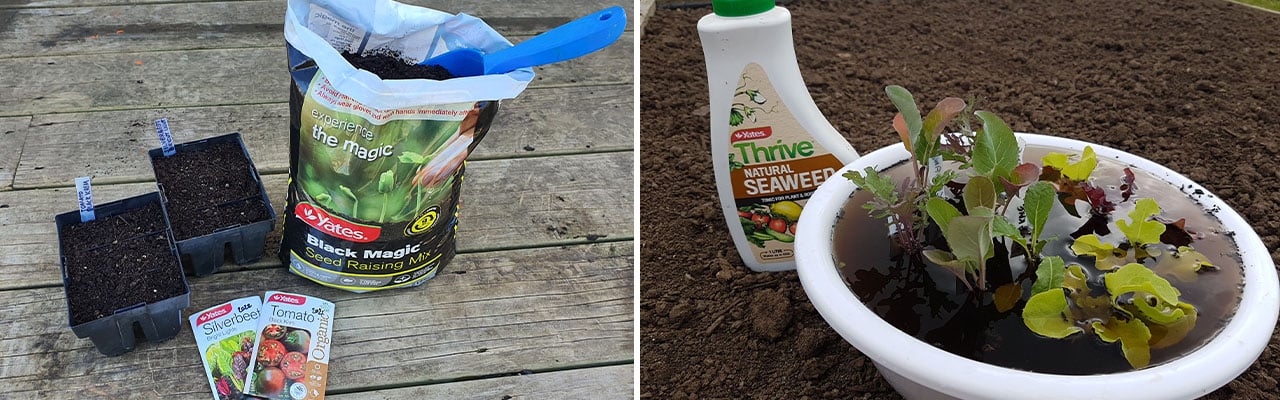
The most cost effective way to start a vegetable garden is to grow from seed. There are many more varieties to choose from and you get many seeds in the packet. For the best results start your seeds off in a quality seed raising mix such as Yates Black Magic Seed Raising mix that has everything a seed needs to get going successfully.
While these vegetables are lower maintenance than other vegetable crops they still require some care to stay healthy and give you a bountiful harvest. While waiting for the harvest there are FOUR main tasks:
These can quickly out compete you crops and rob them of space, light and nutrients. The easiest way to take care of them is to apply a good thick mulch but once a week remove any that decide to show their faces.
Plants can’t survive without water, it is part of the transport system within the plant to get nutrients from the soil throughout the plant, up into the leaves and helps the plant stay upright. Watering deeply every 3 – 5 days, depending on your soil, is better than a short sprinkle every day. A good thick mulch also helps to conserve the soil moisture.
For many quick growing vegetables crops it is a good idea to feed them often with a liquid feed such as Yates Thrive Natural Fish & Seaweed+ Plant Food Concentrate. It is enriched with natural and inorganic ingredients specifically developed to improve plant and soil vitality. A good quality liquid feed makes the nutrients more readily available to the plant and can produce taller plants, larger, greener leaves, and more vigorous growth. A well fed plant can fight off pest and disease easier. It is important to feed the soil as well as the plants to keep the micro communities that support the plants happy and healthy too.
Unfortunately, we aren’t the only ones that want to eat our vegetables, so it is important to remain vigilant for pests and diseases and take action as soon as a problem is found. A good all round option is Yates Nature’s Way Citrus, Vegie & Ornamental Insect Spray which is an organically certified pyrethrum and oil combination insecticide and will take care of common pests including aphids, caterpillars, mealybug, whitefly. It’s also boosted with seaweed to relieve plant stress, and aid recovery from damage.