Loading store
Loading store
WishlistStore FinderGift Cards

Why choose a micathermic heater?

  • Micathermic heaters combine radiant and convection heat for fast, silent warmth.
  • Best suited for bedrooms, offices or small to medium rooms where noise is a concern.
  • Ideal for allergy-sensitive spaces, there is no fan means which means no dust movement.
  • Lightweight, slim and often wall-mountable for flexible use.
What is a micathermic heater?

Micathermic heaters provide dual-action heating where they warm the air in a room through convection while also radiating heat directly toward nearby people and surfaces. This combination makes them efficient and fast, with the added benefit of silent operation. They’re often lightweight and compact, which makes them easy to move from room to room or mount on a wall.
Here’s an overview to help you choose the perfect base for your project:

Best for

Micathermic heaters are a smart choice for medium to large rooms (10–28m²) where you want fast, even heat without any noise. Their slim, panel-like design and dual heating method make them ideal for:

  • Lounges and rumpus rooms
  • Living rooms, to create a drier, warmer space in winter
  • Dining areas
  • Open bedrooms or home offices
  • Quiet spaces like studies or nurseries

Because they don’t use fans, they run silently, which makes them a great option for allergy-sensitive homes or spaces where background noise is a concern. They’re best used in well-insulated areas with standard ceiling height (around 2.4 metres), and work well in homes with curtains and draught stoppers that help retain heat.

How it works

Micathermic heaters use a heating element encased in mica panels, which produce a mix of radiant heat (warming objects and people directly) and convection (circulating warm air around the room).

Because they don’t rely on a fan:

  • They heat rooms quickly and quietly
  • They’re less likely to stir up dust or allergens
  • They’re lighter and faster to heat up than oil column heaters
  • There’s no flame effect and no residual warmth once switched off

If you’re looking for something efficient, low-maintenance and unobtrusive, micathermic heaters are a great all-rounder, especially for Kiwi homes that stay warm once heated.

Key features and benefits

Micathermic heaters are known for their quiet performance and fast heat delivery. They're a great alternative to ceramic or fan heaters if you want warmth without noise.

They also tend to be:

  • Slim and discreet, ideal for tight spaces
  • Energy-efficient for short-to-medium heating periods
  • Allergy-friendly, with no fan-driven airflow
  • Equipped with thermostats, timers, or remote controls depending on model

Micathermic vs other heaters

Feature
Micathermic heater
Warm-up speed
Fast
Very fast
Slow
Noise level
Silent
Low (fan noise)
Silent
Room size
Small to Medium
Small to Medium
Medium to Large
Portability
High
High
Medium

What to consider

Micathermic heaters are a popular choice for medium to large rooms like dining areas, lounges, and rumpus rooms. Their slimline design and dual heating method (radiant and convection) make them fast and efficient for warming spaces between 10m² and 28m². They're ideal for well-insulated areas with standard ceiling heights (around 2.4 metres), and suit homes where quick heat distribution is a priority.

While they’re highly effective, micathermic heaters may not be the best option for very large or open-plan areas, where heat can dissipate quickly. They also don’t offer the visual appeal of flame-effect heaters or the longer residual warmth of Column heater. If ambience or extended heat retention is important to you, consider these alternatives.

Matching wattage to room size

To choose the right heater size for your space:

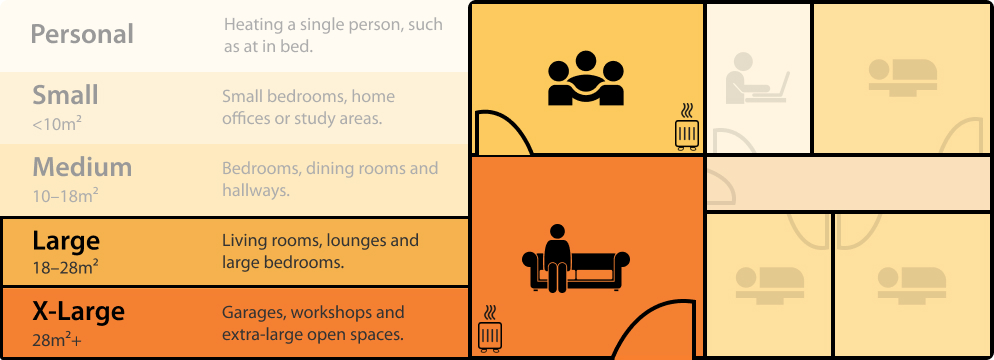
  • Medium rooms (hallways, dining rooms 10–18m²) suit heaters up to 2kW
  • Large rooms (lounges, rumpus rooms 18–28m²) require heaters over 2kW

This helps ensure efficient heating without overloading your power usage. You can also look for room guides on packaging or product listings to match wattage with room type.

Take a look below at the recommended rooms for this heater:

Hicathermic heater home map

Power use & running costs

Heater running costs depend on wattage, electricity rates in your area and how long the heater runs each day. As energy prices can fluctuate across New Zealand, use cost calculators or your electricity provider’s tools to estimate usage. For the most accurate info, base estimates on your local kWh rate and usage patterns.

Choosing the right micathermic heater

To pick the best model for your space:

  1. Match the wattage to your room size, most suit rooms up to 20m².
  2. Decide if you want freestanding or wall-mounted.
  3. Look for extras like timers, thermostats or remote control.
  4. Prioritise safety features like tip-over shutoff or overheat protection.
  5. If you’re heating overnight, choose a model with silent operation and safety cut-outs.

Explore the range

Micathermic heaters offer fast, silent warmth for bedrooms, studies and small to medium rooms. Browse efficient options from Goldair, Kent, Goldair Platinum and Nouveau, all built for quiet, low-maintenance heating.

Want help choosing?

Compare electric heater types below or jump straight to the one that suits you:

Micathermic heaters

Micathermic heater

Medium - Large (10–28 m²)

Quiet and efficient warmth for personal spaces like bedrooms.

Learn more about micathermic heaters
Column heaters

Column heater

Small - Large (10–28 m²)

Great for maintaining steady warmth in living rooms or lounges.

Learn more about column heaters
Ceramic heaters

Ceramic heater

Small - Medium (10–18 m²)

Ideal for warming up small rooms like home offices or bedrooms.

Learn more about ceramic heaters
Convector heaters

Convector heater

Small - Large (10–28 m²)

Quiet, whole-room warmth for medium-sized bedrooms or lounges.

Learn more about convector heaters
Fan heaters

Fan heater

Small (<10 m²)

Best for quick bursts of heat in small spaces like bathrooms.

Learn more about fan heaters
Flame effect heaters

Flame effect heater

Small - Medium (10–18 m²)

Adds cosy visual ambience while gently heating a room.

Learn more about flame effect heaters
Panel heaters

Panel heater

Small - Large (10–28 m²)

Slim and discreet, ideal for background heating in bedrooms or hallways.

Learn more about panel heaters
Radiant heaters

Radiant heater

Small (<10 m²)

Delivers direct heat to people or objects, perfect for spot warming.

Learn more about radiant heaters

FAQ's

Micathermic heaters heat up faster and are usually more compact, while oil column heaters retain heat longer and are better for overnight use. The right choice depends on your room size, insulation, and how long you need to run the heater.

Yes, micathermic heaters are ideal for bedrooms. They’re silent, don’t stir up dust or allergens, and often include safety features like tip-over shutoff and overheat protection.

No, micathermic heaters don’t dry the air as much as fan heaters can. They don’t blow air around, making them more comfortable for people prone to dry skin or allergies.

If the model includes proper safety features (overheat protection, tip-over shutoff, thermostat), then yes it can be used overnight in most cases. Always follow the manufacturer's guidelines and use in a well-ventilated space.

Micathermic heaters are best for rooms up to around 20–25 square metres, depending on insulation. They’re ideal for bedrooms, offices or lounges but may not be powerful enough for large, open-plan areas.

They’re relatively efficient for short to medium use. Most models range from 1000 to 2400 watts, and using a timer or thermostat can help manage power usage. They’re not the most efficient for heating large spaces continuously.

They’re fan-free, so they don’t blow dust or allergens around. This makes them a good choice for allergy-sensitive households or spaces where air quality matters.

Micathermic heaters are silent and use natural convection and radiant heat. Ceramic heaters use a fan to blow hot air, making them better for quick, directional warmth — but not as quiet or allergy-friendly.