
Why choose a fan heater?
- Delivers instant warmth at the flick of a switch
- Lightweight and compact for easy movement between rooms
- Often the most budget-friendly electric heating option
- Great for small spaces or short-term use


Shop all the latest deals in one place

15% low price guarantee*

Keep your information safe
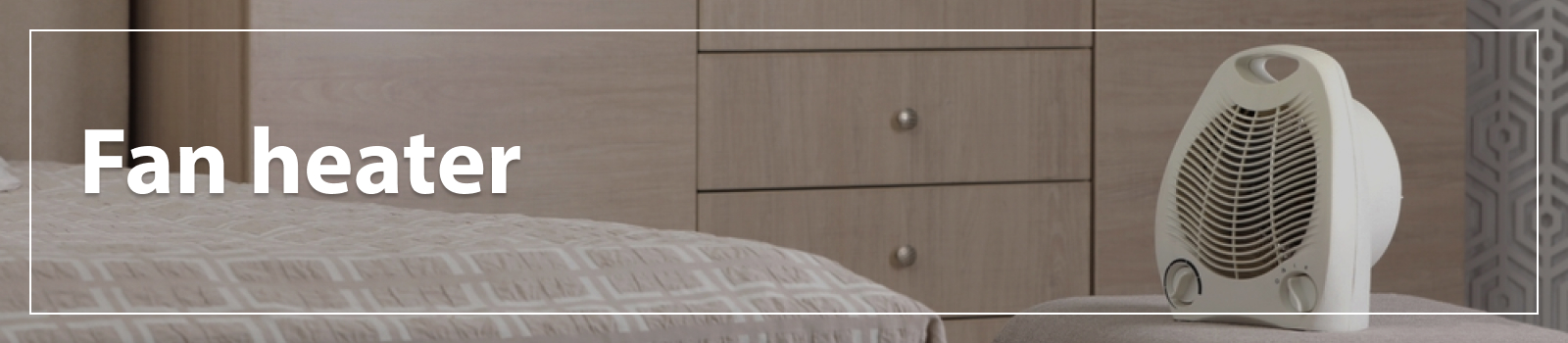
Fan heaters are compact electric heaters that warm up quickly and push heat into the room using a built-in fan. They’re designed for short-term, direct heating and are ideal when you need fast results in a small space. Lightweight and easy to move, fan heaters are a popular choice for spot heating or topping up warmth in bedrooms, bathrooms or workspaces.
They’re also handy for warming your feet or immediate surroundings without waiting for the whole room to heat up.
Fan heaters use an internal element that heats up when powered on. A fan then blows air across this element and pushes warm air into the room. This convection-based system heats up small areas quickly and directly. Because the fan is constantly moving air, the heat disperses fast but also cools quickly once the unit is turned off. Fan heaters work best in enclosed rooms that don’t have significant draughts.
Fan heaters are known for their speed, not for sustained or ambient heat. They’re best for small areas or as a top-up solution, rather than as a main heater for larger rooms. They do make some noise due to the built-in fan, which may not suit quiet environments. They’re generally affordable and widely available, often with simple dials for heat settings and fan speed. Some models include a cool air function for summer use, making them useful all year round.
If you’re looking for overnight heat, silent operation or longer heat retention, a column or micathermic heater may be a better fit.
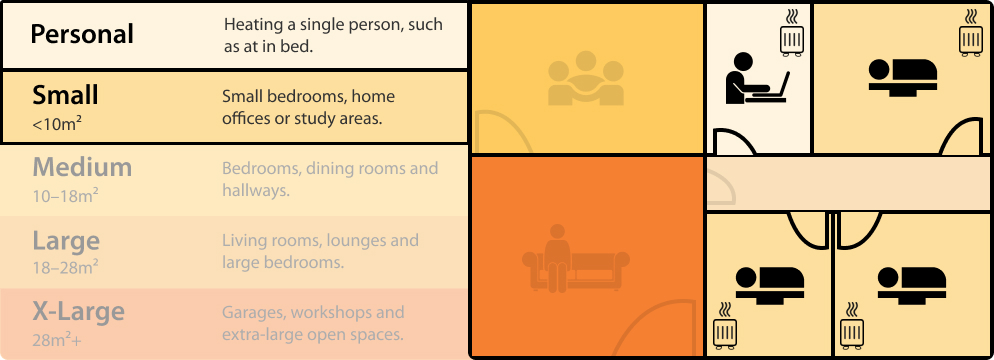
To choose the right heater size for your space:
This helps ensure efficient heating without overloading your power usage. You can also look for room guides on packaging or product listings to match wattage with room type.
Fan heaters are among the highest energy users for their size, mostly due to the combination of heating element and fan motor. They’re best used in short bursts to quickly warm a space, rather than for long-term or whole-room heating.
Heater running costs depend on wattage, electricity rates in your area and how long the heater runs each day. As energy prices can fluctuate across New Zealand, use cost calculators or your electricity provider’s tools to estimate usage. For the most accurate info, base estimates on your local kWh rate and usage patterns.
Fan heaters run on electricity, and their running costs depend on two things: the wattage of the model you choose and how many hours a day you use it. Most fan heaters range from 1,200 watts (1.2kW) for compact portable models to 2,400 watts (2.4kW) for high-output units built to heat larger rooms. The higher the wattage, the faster a heater warms a space, but it also draws more power per hour.
To calculate what a fan heater costs to run, multiply the wattage in kilowatts by your electricity rate and the number of hours you use it. At the NZ average electricity rate of approximately $0.30 per kWh, a 2,000W fan heater running for three hours costs around $0.90 per day.
The most efficient fan heater for your home depends on your room size and how long you run it each day. Prioritise models with a ceramic heating element, adjustable thermostat, multiple heat settings, and a timer function. These four features together reduce run time, prevent unnecessary full-power operation, and give you control over when and how much energy the heater draws.
No single fan heater is the most efficient option in every situation. Efficiency depends on how well the heater matches your room size, how you control it, and which features prevent it from running at full power when it does not need to. The five features below separate a heater that manages your power use from one that draws full wattage regardless of room conditions.
To pick the best model for your space:
Ceramic heaters and fan heaters both distribute warm air through a room using a built-in fan, but they use different heating elements and perform differently depending on how and where you use them. Understanding the difference helps you choose a heater that suits your room, your routine, and your power bill.
Fan heaters are built for fast, targeted warmth when and where you need it. Browse compact, budget-friendly options from Goldair and Nouveau for smaller rooms and quick heat boosts.
Compare electric heater types below or jump straight to the one that suits you:

Medium - Large (10–28 m²)
Quiet and efficient warmth for personal spaces like bedrooms.
Learn more about micathermic heaters
Small - Large (10–28 m²)
Great for maintaining steady warmth in living rooms or lounges.
Learn more about column heaters
Small - Medium (10–18 m²)
Ideal for warming up small rooms like home offices or bedrooms.
Learn more about ceramic heaters
Small - Large (10–28 m²)
Quiet, whole-room warmth for medium-sized bedrooms or lounges.
Learn more about convector heaters
Small (<10 m²)
Best for quick bursts of heat in small spaces like bathrooms.
Learn more about fan heaters
Small - Medium (10–18 m²)
Adds cosy visual ambience while gently heating a room.
Learn more about flame effect heaters
Small - Large (10–28 m²)
Slim and discreet, ideal for background heating in bedrooms or hallways.
Learn more about panel heaters
Small (<10 m²)
Delivers direct heat to people or objects, perfect for spot warming.
Learn more about radiant heatersA fan heater uses an electric heating element and built-in fan to blow warm air into a room. It provides fast, targeted heat, making it ideal for small spaces or short bursts of warmth.
Fan heaters can be energy efficient for short-term or spot heating, especially in small, enclosed rooms. However, they’re less efficient than radiant or panel heaters for long periods of use.
Most fan heaters range from 1000 to 2400 watts, similar to other electric heaters. Because they heat quickly but cool down just as fast, it’s best to use them for quick warmth rather than all-day heating.
Most fan heaters include built-in safety features like tip-over switches and overheat protection. For added safety, avoid placing them near curtains or bedding and use on a stable, flat surface.
Yes, because they use a fan to circulate heat, they do produce a soft humming or whirring sound. They’re generally quiet enough for daytime use but may not suit ultra-quiet spaces like bedrooms.
It’s not recommended to leave fan heaters running unattended or overnight unless the model has a thermostat, timer, and safety shut-offs. They're best for short-term heating rather than all-night use.
Only IP-rated fan heaters are suitable for bathroom use due to moisture risk. Never use a standard fan heater in a wet area unless the product specifically states it’s safe for bathroom environments.
Both use fans, but ceramic heaters have heating elements that regulate heat more precisely and may retain heat slightly better. Ceramic models often offer quieter operation and better efficiency than basic fan heaters.