Loading store
Loading store
WishlistStore FinderGift Cards

Installing a heated towel rail in New Zealand

Heated towel rails have become a standard feature in New Zealand bathrooms. They keep towels dry and warm, reduce bathroom dampness, and add a considered finish to any renovation. This guide covers installation, sizing, running costs, IP ratings, and how to choose between horizontal and vertical styles.
Key takeaways

  • Electric heated towel rails require a registered electrician, not a plumber. Hot water rails require a licensed plumber.
  • Grade 304 stainless steel suits most NZ bathrooms. Grade 316 is recommended for coastal homes with salt-air exposure.
  • A typical residential rail costs 3 to 5 cents per hour to run at the national average electricity rate, making it one of the lowest-cost electric appliances in the home.
  • An IP44 rating is the minimum required for bathroom installation. Your electrician will confirm the zone requirements for your specific position.

Do you need a plumber, and which rail suits a New Zealand bathroom?

No. A plumber is not required to install an electric heated towel rail. Electric models connect to your home's electrical system, which means a registered electrician carries out the wiring work. If your heated towel rail connects to your home's hot water system rather than an electrical circuit, a licensed plumber carries out that installation instead.

What is the best heated towel rail for a New Zealand bathroom?

For most New Zealand bathrooms, a stainless-steel electric rail in a ladder or vertical configuration delivers the right balance of heat output, durability, and appearance.

  • Grade 304 stainless steel resists bathroom moisture and humidity and cleans well over time. This suits most inland New Zealand homes.
  • Grade 316 stainless steel offers greater corrosion resistance in salt-air conditions and is the better choice for coastal homes or properties near the sea.
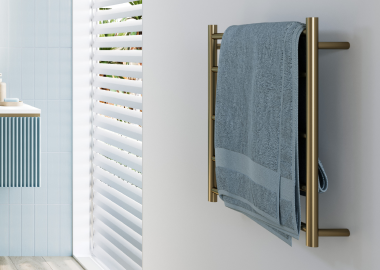
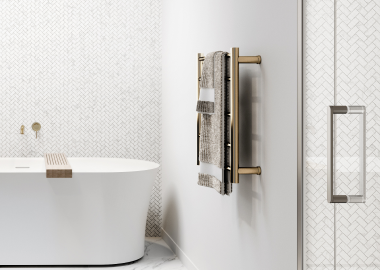
  • Finish options include matte black, brushed nickel, brushed brass, and chrome, matching the tapware finishes most commonly found in New Zealand renovations.
Pro tip icon

Coastal homes:

If your home is near the coast or in a high-salt-air environment, choose grade 316 stainless steel over standard 304. The difference in corrosion resistance over ten or more years is significant.

Shop heated towel rails
Heated towel rail installation and choosing the right rail

Sizing your heated towel rail

Size selection depends on how many towels you need the rail to hold at once and the available wall space in your bathroom. Manufacturers measure heated towel rails by overall height and width, and the number of horizontal bars determines towel capacity.

  • Standard two-person bathroom: four to six bars, 500 to 600mm wide
  • Larger family bathroom or ensuite: wider rails or taller vertical designs that maximise bar count without increasing the horizontal footprint
  • Narrow bathrooms or alongside a vanity: vertical rails that maximise capacity within a compact horizontal footprint

Check the product dimensions carefully against your wall space before purchasing. Most rails are measured from the outside of the end bars, so allow for brackets and clearance when measuring your available wall space.

Key factors when choosing a heated towel rail

  • Rail width and bar count: more bars mean more towel capacity and higher wattage output
  • Wattage: most residential rails run between 65 and 130 watts, enough to warm two to four towels and contribute gentle background warmth to a small bathroom
  • Timer compatibility: choose a model designed to work with an inline timer for better running cost control
  • IP rating: confirm the model carries at least an IP44 rating for your bathroom zone
Sizing your heated towel rail

Running cost and how heated towel rail timers work

Heated towel rails are among the lower-cost electric appliances in a New Zealand home. A typical residential rail runs at 65 to 130 watts, which costs between 3 and 5 cents per hour to operate at the national average electricity rate of approximately 39 cents per kWh.

  • A 100W rail running 4 hours per day costs roughly 15 to 20 cents per day to operate
  • Using a timer for morning and evening routines only keeps annual running costs well under $100 for most households
  • Most residential rails carry approval for continuous operation and are safe to leave on overnight

How does a heated towel rail timer work?

A heated towel rail timer controls when the rail turns on and off automatically, so it heats only when you need it rather than running continuously. Most timers allow you to set multiple on and off periods throughout the day, such as mornings before and after showering and evenings before bed.

An inline timer installs between the rail and the wall circuit during installation, meaning the rail itself does not need built-in timer functionality. This makes it straightforward to add timer control to most standard models.

Pro tip icon

Timer tip:

Program your rail to turn on 30 minutes before your usual shower time and off 30 minutes afterward. This simple habit keeps towels warm without the rail running all day.

Running cost and how heated towel rail timers work

IP ratings and choosing between horizontal or vertical

New Zealand bathrooms are divided into electrical zones based on proximity to water sources. An IP44 rating is the standard minimum for heated towel rail installation in a bathroom. IP44 means the unit resists water splashes from any direction, which covers most wall positions in a standard bathroom layout. Models rated IP55 or higher suit installation closer to a shower or bath enclosure.

Your electrician will confirm which zone your intended installation position falls into and advise whether the rail you have chosen carries the correct rating for that location. Never install a heated towel rail without confirming IP compliance for the specific position.

Horizontal or vertical: which style suits your bathroom?

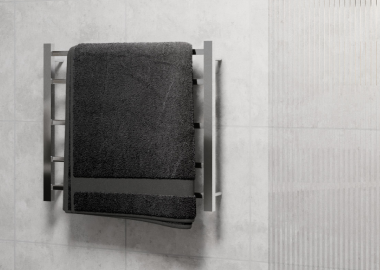
Horizontal ladder rails are the traditional choice and suit most standard bathroom layouts. They mount to the wall at towel height, making it easy to hang and retrieve towels, and suit rooms with a wider wall available alongside a vanity or bath.

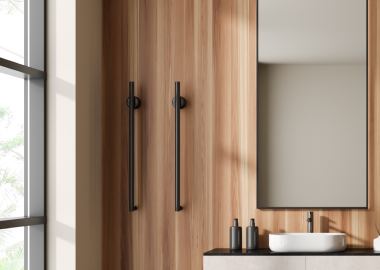
Vertical rails mount in a tall, narrow configuration and suit bathrooms where horizontal wall space is limited, where the design calls for a feature rail, or where maximising bar count within a small footprint matters. Vertical rails heat and dry towels at least as effectively as horizontal models of the same wattage.

Both types work with inline timers and carry the same IP rating requirements for bathroom installation. The choice comes down to your available wall space, your bathroom layout, and the visual result you want.

Pro tip icon

Narrow bathroom tip:

In a narrow bathroom where wall space is tight, a vertical rail gives you more bar capacity within a smaller horizontal footprint and can also contribute gentle background warmth more evenly through the room than a wide horizontal unit.

Shop heated towel rails
IP ratings and horizontal vs vertical heated towel rails

Browse heated towel rails and towel warmers at Mitre 10

Whether you are renovating a full bathroom or adding a finishing touch to an existing space, Mitre 10 stocks a wide range of heated towel rails in different sizes, finishes, and configurations. Visit us in-store to compare dimensions and finishes in person, or browse the full range online.