Loading store
Loading store
WishlistStore FinderGift Cards

Find the best dehumidifier for your space

  • Dehumidifiers reduce excess moisture to help prevent mould, condensation and damp smells
  • Choose the right size based on your room: small (up to 12L), medium (12–18L), large (18L+)
  • Compressor models suit warm, humid areas; desiccant models are better for cold, unheated rooms
  • Features like timers, humidistats and laundry mode improve performance and efficiency
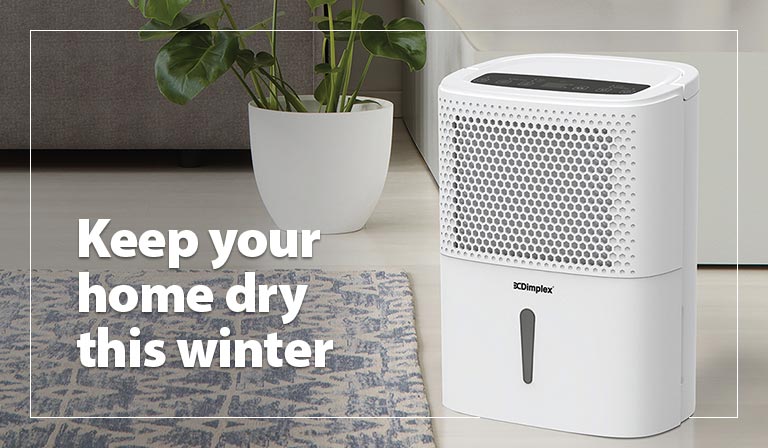
Keep your home dry this winter with a dehumidifier

If you’ve noticed condensation on your windows, musty smells, mould, or damp rooms that never feel truly dry, a dehumidifier can make a big difference. These appliances work by pulling moisture from the air, helping to reduce mould growth, improve air quality, and make your home feel warmer and more comfortable. Damp air is common during New Zealand winters, especially in older homes or those without much insulation. Moisture from daily activities like cooking, showering and drying laundry indoors can quickly build up, making your space harder to heat and less healthy to live in. A dehumidifier removes that excess moisture and, when used alongside your heater, can reduce energy use while creating a drier, healthier environment for your family.

Do I need a dehumidifier in New Zealand?

New Zealand's climate is wetter than many people expect, and a large proportion of NZ homes — particularly older villas, bungalows, and poorly insulated rentals — trap significant moisture indoors through cooking, showering, drying laundry, and breathing. When that moisture has nowhere to go, relative humidity rises and creates conditions where condensation, mould, and dust mites thrive.

The clearest signs your home needs a dehumidifier include condensation forming on windows in the morning, a persistent musty smell in bedrooms or wardrobes, black mould spots appearing on walls or ceilings, laundry taking more than a day to dry indoors, or a general feeling of dampness in the air. Any one of these signals that indoor humidity has risen above the recommended range of 40 to 60 percent relative humidity (RH).

If your home shows two or more of these signs during winter, a dehumidifier will reduce moisture levels, improve air quality, and make the space feel warmer. Damp air feels colder than dry air at the same temperature, so reducing humidity can improve perceived comfort without increasing your heating costs.

What does a dehumidifier do?

Dehumidifiers pull in humid air, remove the excess water, and release drier air back into the room. They help prevent damp and mould while improving air quality. In winter, this can also help your heater work more efficiently, since dry air takes less energy to warm than damp air. By reducing moisture, a dehumidifier also helps protect soft furnishings, curtains, and walls from long-term damage.

Where and how to use a dehumidifier

Dehumidifiers can be used in nearly any room, especially where moisture tends to build up.

Common use areas include:

  • Bedrooms, where they reduce condensation on windows and help improve sleep comfort
  • Living rooms, to create a drier, warmer space in winter
  • Bathrooms and kitchens, where steam from showers and cooking can add significant moisture
  • Laundry areas, for faster indoor drying and less moisture in the air
  • Garages or basements, to protect stored items and reduce musty odours
  • Holiday homes or caravans, to manage humidity while the space is unoccupied

For best results, place the unit centrally in the room with clear space around it for airflow. Close doors and windows while the unit is running to avoid drawing in new moisture. If you’re using it in a high-moisture area, consider a model with a continuous drain hose to reduce the need for frequent emptying.

What size dehumidifier do you need?

Choosing the right size dehumidifier depends on the size of your room and how damp it gets. Smaller rooms need less power, while larger or moisture-heavy spaces may require a higher capacity unit.

Room type
Approx. room size
Recommended capacity
Small bedroom or office
Up to 15m²
Up to 12L per day
Medium lounge or apartment
15 to 25m²
12 to 18L per day
Large living areas
Over 25m²
18L or more per day
Laundry drying indoors
Any size
Use laundry mode
Pro tip icon
Tip: Desiccant models are better for cold rooms under 15°C. Compressor models are more efficient in warmer spaces.

Not sure where to start?

Here’s a quick guide to help you choose:

Small space

<15m²

Small bedrooms, home offices or study areas.

Recommended size: Up to 12L per day.

Medium space

15–25m²

Bedrooms, dining rooms and hallways.

Recommended size: 12 to 18L per day.

Large space

>25m²

Living rooms, lounges and large bedrooms.

Recommended size: 18L or more per day.

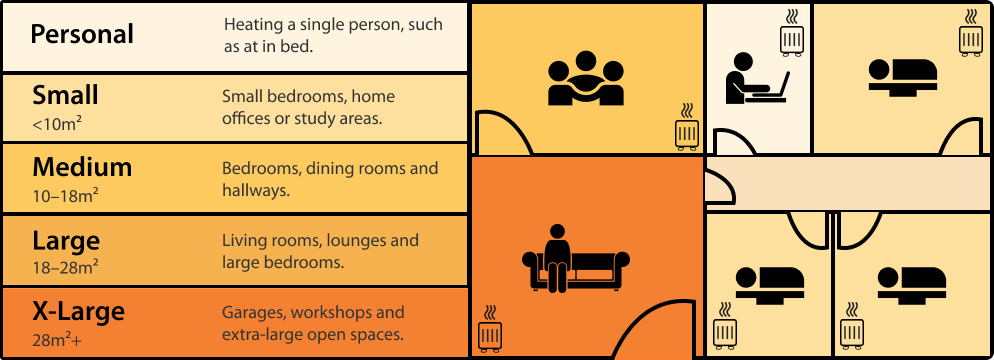
Whole-home

28m²+

Garages, workshops and extra-large open spaces.

Recommended size: 18L or higher capacity with drain hose

Best dehumidifier for common needs

The right dehumidifier depends on the room and how you plan to use it. Here are a few typical scenarios to help guide your decision:

  • If you’re dealing with a small, damp bedroom, a compact 8 to 12 litre compressor model will quietly manage moisture without taking up too much space. These are ideal for overnight use and are easy to move between rooms.
  • For a medium-sized lounge, a 12 to 18 litre compressor model offers a good balance of power and efficiency. Look for a built-in humidistat so the unit can automatically turn off when the room reaches your preferred dryness level.
  • If your space is cold or unheated, like a basement or garage, a desiccant dehumidifier is the better choice. Unlike compressor models, desiccant units stay effective even when temperatures drop below 10°C.
  • When you’re drying laundry indoors, choose a model with a dedicated laundry mode. This increases airflow and helps speed up drying without increasing moisture in the room.
  • For larger home areas or multiple rooms, look for an 18 litre or higher capacity compressor model. A larger tank or hose connection will save you time on emptying and is ideal for frequent use.

Features to look for

While all dehumidifiers perform the same basic function, some features can make them much easier to use and maintain.

Here are the ones to look for:

  • If you’re dealing with a small, damp bedroom, a compact 8 to 12 litre compressor model will quietly manage moisture without taking up too much space. These are ideal for overnight use and are easy to move between rooms.
  • For a medium-sized lounge, a 12 to 18 litre compressor model offers a good balance of power and efficiency. Look for a built-in humidistat so the unit can automatically turn off when the room reaches your preferred dryness level.
  • If your space is cold or unheated, like a basement or garage, a desiccant dehumidifier is the better choice. Unlike compressor models, desiccant units stay effective even when temperatures drop below 10°C.
  • When you’re drying laundry indoors, choose a model with a dedicated laundry mode. This increases airflow and helps speed up drying without increasing moisture in the room.
  • For larger home areas or multiple rooms, look for an 18 litre or higher capacity compressor model. A larger tank or hose connection will save you time on emptying and is ideal for frequent use.

Compressor vs desiccant

There are two main types of dehumidifiers. The right one for your home depends on how cold your space gets and how often you plan to run the unit.

How a compressor dehumidifier works

A compressor dehumidifier draws air over a cold coil, which causes moisture to condense and drip into a collection tank, in the same way a refrigerator forms condensation on its interior walls. Compressor models remove more litres of moisture per day at a lower running wattage in warm conditions, making them efficient during summer and in consistently heated rooms.

Compressor dehumidifiers use refrigerant to remove moisture from warm air. They're best for everyday use in warmer, humid parts of the country such as the North Island and work well in bedrooms or living areas where the temperature stays above 15°C. These models are generally more energy efficient, but they tend to be heavier and can be noisier than other types. In rooms that regularly drop below 10°C, their performance may reduce significantly.

How a desiccant dehumidifier works

A desiccant dehumidifier passes air through a rotating wheel coated in silica gel, which absorbs moisture chemically rather than through cooling. The absorbed moisture is then driven off by a small internal heater and expelled as warm, dry air.

Desiccant dehumidifiers use a drying wheel to absorb moisture from the air. They’re ideal for colder or unheated spaces such as basements, garages, caravans or holiday homes making them well suited to winter conditions in the South Island. These units are lightweight, run more quietly, and remain effective even in low temperatures. They do tend to use more electricity than compressor models, but their reliability in cold conditions makes them a great choice for tough environments.

Which type suits your situation?

Choose a desiccant dehumidifier for bedrooms, living rooms, and any space that drops below 15 degrees Celsius during winter. Desiccant models maintain full moisture extraction through cold NZ nights and are the more practical choice for year-round use in most NZ homes.

Choose a compressor dehumidifier for consistently heated spaces, garages with good insulation, or summer use where indoor temperatures stay above 20 degrees. Compressor models typically remove more moisture per day at a lower running cost in warm conditions.

Feature
Compressor
Desiccant
Best for
Warm, humid homes
Cold, unheated rooms
Ideal temperature
15°C and above
Below 15°C
Energy use
Lower in warm conditions
Higher but reliable in cold
Noise level
Moderate
Quiet

Power use & running costs

Most dehumidifiers use between 200 and 500 watts, depending on the size and settings. That’s roughly the same as running a fridge or small heater. To save power, choose a unit with a humidistat or timer, which helps stop the unit automatically once your room reaches your target humidity. Running costs depend on wattage, electricity rates in your area and how long the heater runs each day. As energy prices can fluctuate across New Zealand, use cost calculators or your electricity provider’s tools to estimate usage. For the most accurate info, base estimates on your local kWh rate and usage patterns.


Dehumidifier home map


Pro tip icon

What to consider when choosing a dehumidifier

Before you buy, think about how and where you’ll use the unit:

  • Choose the right size for the space and moisture level
  • For cold rooms or garages, use a desiccant model
  • For bedrooms, check the noise level if you plan to run it overnight
  • If you dry clothes indoors, look for laundry mode and strong airflow
  • Larger tanks and drain hoses are better for high-use spaces
  • Models with washable filters are easier to maintain over time

Create a warmer, drier home this winter

A dehumidifier removes moisture from the air, helping your space feel more comfortable and easier to heat. Whether you’re choosing a compact Goldair or Nouveau unit for a small bedroom, a sleek Breville model for everyday use, or a powerful Winix or Goldair Platinum dehumidifier for larger or damper areas, the right solution can make a noticeable difference in your home.

For the best results, pair your dehumidifier with an electric heater that suits your room size and layout. Whether you're reducing condensation in one room or creating a warm, dry environment throughout the house, using a dehumidifier alongside a well-matched heater can help you stay warm and save energy.

What humidity level should I set my dehumidifier to?

Set your dehumidifier to maintain a relative humidity (RH) level between 40 and 60 percent.

In practice, most New Zealand households benefit from targeting 50 percent RH as a starting point. If you notice condensation on windows after setting the dehumidifier to 50 percent, lower the target to 45 percent. If the air feels dry or occupants experience dry throats or skin irritation, raise the target to 55 percent. Most current dehumidifier models display current and target humidity on a digital panel and cycle automatically to maintain your chosen level.

Avoid setting the target below 40 percent RH in living spaces, as very dry air can irritate airways, damage timber flooring and furniture, and cause static electricity buildup. Settings below 40 percent are occasionally used in storage areas for moisture-sensitive items but are not suitable for bedrooms or main living areas.

How long should you run a dehumidifier each day?

The amount of time a dehumidifier needs to run each day depends on your starting humidity level, the size of the room, and how much new moisture enters the space through daily activity. In a highly damp room that has not been dehumidified before, you may need to run the unit continuously for the first 24 to 48 hours to bring humidity down to the target range. Once the room reaches the target level, the dehumidifier cycles on and off automatically if it has a built-in humidistat, reducing total run time significantly.

For a room with moderate dampness and a modern, well-sealed dehumidifier, six to twelve hours of operation per day is typically sufficient to maintain humidity between 40 and 60 percent. Rooms with higher moisture input, such as bathrooms, laundry rooms, or bedrooms where wet laundry is dried, may require longer run times. Spaces with good ventilation and lower occupancy need less.

Where should I place a dehumidifier for best results?

Placement has a direct effect on how efficiently a dehumidifier operates. The unit needs to draw air in and push dry air out through its vents, which means adequate clearance around the unit and good access to the room's air supply are both important. Poor placement reduces airflow, forces the motor to work harder, and slows the rate of moisture extraction.

  • Position centrally where possible. A dehumidifier placed in the middle of a room draws from the full volume of air rather than pulling from one corner. In an open-plan space, position it toward the dampest area of the room.
  • Keep at least 30 centimetres of clearance on all sides. Most dehumidifiers draw air through sides or the back and expel dry air through the top or front. Placing the unit flush against a wall or in a cupboard restricts airflow and reduces efficiency.
  • Close windows and doors during operation. Running a dehumidifier with windows open causes it to continually process fresh humid air from outside, which increases run time and reduces effectiveness. Dehumidify the room first, then ventilate briefly to refresh the air.
  • Place in the room with the highest moisture source first. Bathrooms, laundry rooms, and bedrooms where wet laundry is dried benefit most from direct dehumidification. If you use one unit across multiple rooms, start in the dampest space and move it once the target humidity is reached.
  • Use on a hard, level surface. Carpet can restrict the base vents on some models. A hard floor or firm surface ensures stable airflow and prevents the unit from working against restricted intake.

Avoid placing a dehumidifier directly next to a heat source such as a heater or heat pump, as the warmer air drawn into the unit can skew the humidistat reading and cause the unit to cycle off before the room has fully dehumidified.

FAQ's

Experts recommend maintaining indoor humidity between 30% and 50% for optimal comfort and health. This range helps prevent issues like mould growth, dust mites, and respiratory discomfort.

The appropriate dehumidifier size depends on the room's area and moisture level:

  • Small rooms (up to 15m²): 8–12L capacity
  • Medium rooms (15–25m²): 12–18L capacity
  • Large rooms (over 25m²): 18L or more

For areas with high moisture, consider a higher capacity unit.

Yes, many dehumidifiers have a "laundry mode" that increases airflow, helping clothes dry faster indoors while reducing moisture buildup.

Yes, by reducing humidity levels, dehumidifiers create an environment less conducive to mould and mildew growth, protecting your home and health.

Most modern dehumidifiers are designed to operate safely unattended. Features like auto shut-off when the tank is full and timers enhance safety.

Regular maintenance ensures efficiency:

  • Water tank: Empty and clean regularly to prevent mold growth.
  • Filters: Clean or replace as recommended by the manufacturer.
  • Exterior: Wipe down to remove dust and debris.

The water, known as condensate, is generally not safe for drinking but can be used for non-potable purposes like watering plants.

While humidity levels are often higher in winter, some regions in New Zealand experience high humidity in summer. If you notice condensation, musty odors, or discomfort, a dehumidifier can be beneficial year-round.