Carbon is one of the most abundant elements in the universe. It forms the basis of all known life and plays a vital role in regulating the planet’s temperature. Nature has a way of reusing carbon atoms, but this only works efficiently with a natural amount of carbon.
The basics
The earth has a brilliant system of moving carbon between the atmosphere, oceans, soil, and living organisms. This is called the carbon cycle.
Carbon becomes a problem when this natural cycle is thrown out of sync. When we use fossil fuels, carbon combines with oxygen (becoming carbon dioxide or CO₂) and gets released into the atmosphere.
For the past 100 years or so, we’ve been producing CO₂ a lot faster than the earth can process it, so we end up with too much carbon in the air. The CO₂ then traps the heat from the sun in the atmosphere and plays havoc with our climate.
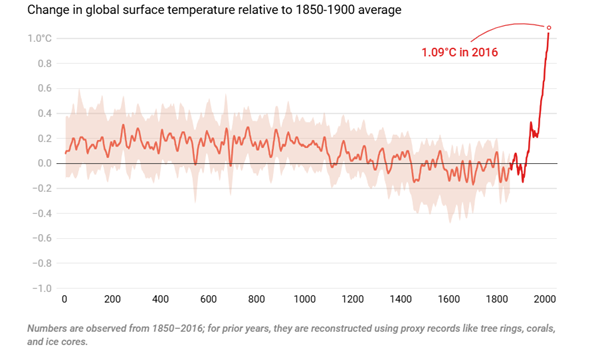
Aotearoa has committed to being zero carbon by 2050, which means we all need to do our bit to reduce our emissions.
Construction and demolition create significant environmental impacts globally, contributing to 38% of greenhouse gas emissions and 35% of global energy demand (Ciacci, 2022).
When people talk about carbon in construction and demolition, they typically split it into two types:
What about greenhouse gases?
Before we get to the different types of carbon, it’s important to also understand greenhouse gases. While carbon is important, it’s not the only gas emission contributing to our warming planet.
Greenhouse gases, including carbon, are one of the biggest contributors to climate change and its ongoing effects because they trap heat in the earth's atmosphere. Cars, planes, power plants, and factories all emit greenhouse gases.
The Kyoto Protocol, an international greenhouse gas agreement, defines six troubling types of emissions:
- Carbon dioxide (CO2): When fossil fuels, waste, and plant matter burn, they emit CO2, the most common greenhouse gas emission.
- Methane (CH4): Landfills, livestock, agricultural activities, and the production of coal, natural gas, and oil all generate CH4, an emission far more powerful than CO2.
- Nitrous oxide (N2O): Sewage treatment and the combustion of fossil fuels both produce N2O. However, fertiliser and agricultural soil management release most of this potent emission.
- Sulphur hexafluoride (SF6): The electric power industry uses this man-made compound for insulation and current interruption.
- Hydrofluorocarbons (HFCs): Solvents, refrigerants, firefighting agents, and propellants for aerosols use HFCs as a replacement for ozone-depleting chlorofluorocarbons (CFCs).
- Perfluorocarbons (PFCs): There are relatively low amounts of PFCs in the atmosphere,¬ but they're hard to get rid of. The estimated atmospheric life of this solvent and component of aluminium production ranges from 10,000 to 50,000 years!
What’s a carbon footprint?
A carbon footprint measures all the emissions (not just carbon) from an organisation, event, product, or person.
Not all gases are created equal - some have a more harmful effect than others – so a carbon footprint is calculated in equivalent tons of CO₂ (CO₂e). It adds together all the different greenhouse gases and consolidates it into one number, which is easier to understand and compare.
For example, methane has a 100-year global warming potential 28-34 times that of CO₂. So, one tonne of methane contributes 28 tonnes to our carbon footprint.
Once we have a measurement of the total carbon being produced, we can then work out ways to reduce our carbon footprint.
Mitre 10 is committed to reducing its carbon footprint – you can see how we’re doing on our journey here.
Embodied carbon
Embodied carbon occurs during the building and demolition phases of construction.
It refers to the total greenhouse gas emissions associated with the production, transportation, and installation of materials, products, or infrastructure, right up until the building (or project being constructed) starts being used.
It also includes any emissions from the destruction or demolition of a building, once it’s no longer in use.
Embodied carbon is measured in equivalent tons of carbon dioxide (CO₂e).
Why is it important?
For many buildings and infrastructure projects, a significant portion of the total life-cycle emissions come from embodied carbon.
Understanding embodied carbon helps you choose materials and designs which minimise carbon emissions, improving your environmental sustainability.
Key stages of embodied carbon
- Raw material extraction: Emissions from the extraction of raw materials (e.g. mining of metals, logging for timber).
- Transportation: Emissions from transporting both raw materials to manufacturing sites and finished products to their final destinations.
- Manufacturing and processing: Emissions from the energy and processes used to convert raw materials into finished products (e.g. steel production, cement manufacturing).
- Construction and installation: Emissions from the construction process, including energy used by machinery and vehicles on construction sites.
Operational carbon
Historically, measuring the environmental impact of buildings has focused on the construction phase, but that doesn’t capture the impact over its whole life cycle.
Operational carbon is all the carbon created in the use phase of a building’s lifespan. Typically, this means the energy that a building uses after it’s been built, i.e. how its users cook, heat, cool, light, and clean inside the building.
Most people already know how to create more energy-efficient buildings, they just don’t use fancy terms like operational carbon to describe it. A typical building emits 60 per cent of its total carbon after it’s been built, so even small changes can add up quickly.
By reducing operational carbon, we get healthier, drier, well-lit, and well-heated homes, which are both better to live in and better for the planet. What’s not to love about that?