Reducing the carbon created during a building project is a great way to improve your environmental sustainability. One of the simplest places to start is by reducing your waste.
In New Zealand, it’s easy to chuck all your waste in a skip bin and let someone else bury the problem, but that doesn’t mean it goes away. Landfills emit a lot of greenhouse gases, so by following these construction and demolition waste reduction measures, you’ll be well on your way to reducing your carbon footprint.
Waste and carbon
Reducing waste is easiest if it’s tackled in the design phase. Efficient design uses minimal materials and maximises the lifespan of the product, reducing the need for replacements.
You can also use modular or prefabricated construction techniques to improve material efficiency and reduce waste.
We recommend working with your client and architect/designer to incorporate this kind of thinking early on.
What are LCAs and EPDs?
While it’s to tell you to choose materials with lower carbon footprints, we know that figuring out the true environmental impact of a product can be very difficult.
Companies are great at telling you how ‘environmentally friendly’ their products are, but how do you measure these claims? It’s especially hard if you’re trying to compare two different products, like roofing, cladding, or foundation systems.
How do you compare apples and oranges?
To compare the sustainability credentials of two different products, we use a Life Cycle Analysis (LCA).
An LCA evaluates the environmental impacts of a product throughout its entire life cycle, including all the stages of manufacturing from raw material extraction to disposal or recycling. LCAs use a set international system of measures, so we can be confident they’re consistent, which helps us make more informed decisions about a product’s sustainability credentials.
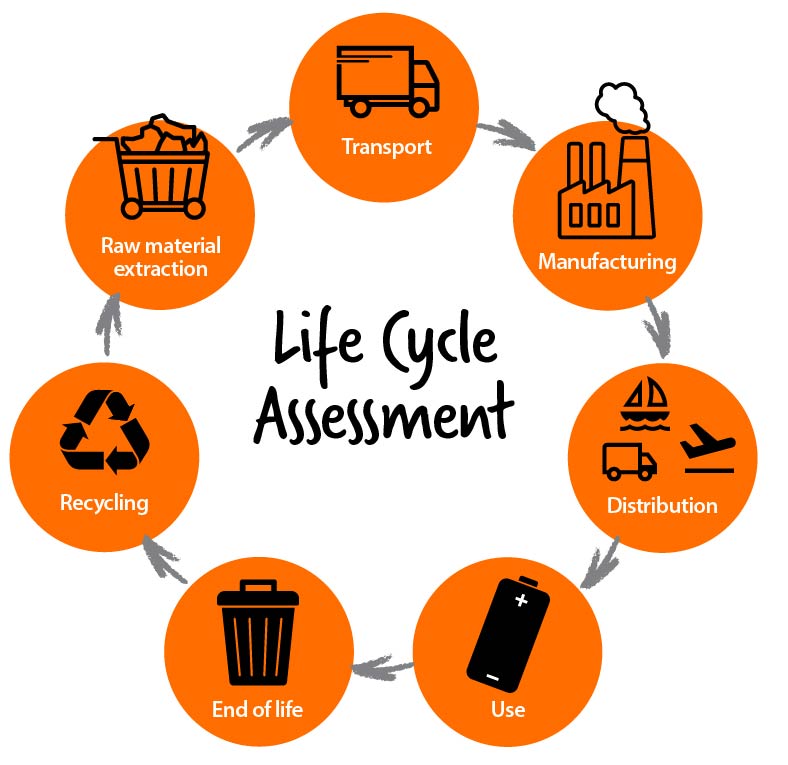
Because LCAs often contain sensitive data about a company, its systems, or its product, businesses who want to share the results of their product’s LCA use an Environmental Product Declaration (EPD). EPDs also follow a set of rules, to produce a certified measurement of the embodied carbon in a product.
When you have two products that look different, an apple and an orange, you can use EPDs to fairly compare the environmental impacts of each option.
Putting it into practice
Even if you have no say in the design, there are still actions you can take to reduce your waste during a build, which reduces the embodied carbon of your projects. There are also several product choice decisions you can make with your clients to reduce the operational carbon of your projects. Read on to find out how!
Embodied carbon
To reduce your embodied carbon, we recommend:
- Build smarter to produce less waste in the first place – that old adage of ‘measure twice, cut once’ will stand you in good stead here.
- Use fewer materials where possible – fewer material types create fewer waste streams to deal with.
- Recycle or reuse unused materials (this uses less carbon than creating a product from scratch)
- Source products which are made from waste/recycled materials
- Reduce transportation emissions by sourcing materials locally
- Build for disassembly and reuse at the end of life
- Choose materials with lower carbon footprints, such as low-carbon concrete, steel alternatives, or bio-based materials. You can do this by comparing their Environmental Product Declarations.
At Mitre 10 we ensure that our suppliers give us EPD information, so if you’re still lost, speak to your trade rep who can provide you with EPD information to help you to compare products and make informed choices about the materials you use.
Operational carbon
You can significantly reduce operational carbon by making high-quality, well-insulated, low-energy buildings. You can do this by:
- improving insulation levels
- maximising passive heating and cooling
- fitting solar or renewable energy systems
- reducing energy consumption, e.g. LED lights and timer switches
- waste-water capture and recycling
- retrofitting existing building stock, rather than building from scratch
- integrating renewable energy systems to minimise power and water use
Extras for experts
If you took all the construction projects from around the world and put them next to each other, you’d get a city the size of Paris every week. Despite this, fewer than 1% of buildings have their carbon footprints assessed. Even fewer undergo a detailed analysis of embodied and operational carbon.
To achieve the Paris Agreement's goal of global net-zero carbon emissions by 2050, understanding the differences between embodied and operational carbon and their roles in climate change is essential.
- Emissions reduction | Building Performance
- Environment and zero-carbon-research | BRANZ
- Commercial Buildings Decarbonisation Pathway | EECA
- Introduction to Net Zero Buildings
- Net-zero operational carbon buildings: State of the art | WBCSD
- Calculating operational carbon footprint – Hera
- Operational Carbon - GSA Sustainable Facilities Tool
- ULI Report: Balancing Embodied and Operational Carbon Emissions from New Buildings Is Critical for Long-term Decarbonization - Urban Land Magazine
- Embodied carbon vs. operational carbon | One Click LCA
The Heavy Engineering Research Association has a bunch of useful research and information on how to reduce carbon in construction and demolition projects.