
Timber sub floors: Nailing the basics
5 March 2026
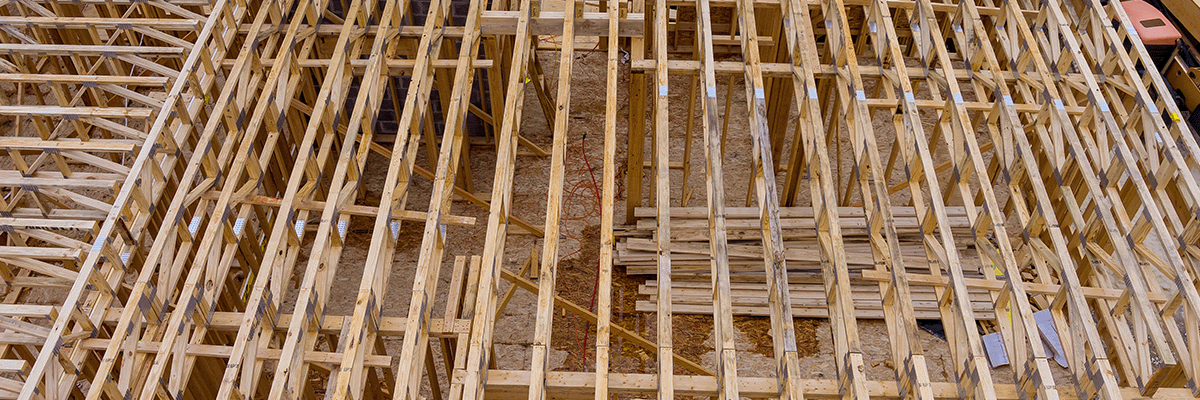
Timber sub floors are still common across New Zealand, especially on sloping or poor ground, but they’re a regular source of enquiries to the BRANZ technical support team. If the floor isn’t built correctly, you can end up with bounce, cracked wall linings, sticky doors or moisture issues.
So, what do you need to keep in mind when you’re installing them?
Maintain healthy joists
Joists must be properly tied in with either a full-depth boundary joist (minimum 45mm thick) around the perimeter or solid blocking at a maximum of 1800mm centres. That includes if you have a concrete foundation – bearer plates require 1800mm blocking along the foundation wall. This stops joists twisting.
Blocking needs to be directly above and fixed to either a bearer connected to subfloor bracing, or the top plate of wall bracing for a lower floor. You’ll need to use extra blocking or strutting only when joists span more than 2.5m or are deep (around four times their thickness or more), otherwise it’s not required.
Cantilevered joists need careful detailing, especially for balconies and other wet areas. Follow the 2kPa minimum loading requirements in NZS 3604. Install a boundary joist at the outer edge and solid blocking at the support line, and make sure falls, membranes and flashings keep water out of the framing.
Strengthen walls appropriately
For loadbearing walls, use double joists under the wall line and space packers at less than 600mm centres. Trimming studs should be within 300mm of each end of the joists. This keeps linings and junctions tidy over time.
Non-loadbearing walls are a common movement point. If a wall is directly over, or within 150mm of, a joist and it’s not braced, no extra support is usually needed. If it’s further off the joist or is braced, add 90×45 mm blocking at 1200mm centres under the wall or shift the layout so it lands on a joist. Don’t forget solid support under door studs to avoid sagging and sticking doors.
Get fixings sorted
Keep notches small and close to supports, within the NZS 3604 rules, and don’t notch bearers at all. Over-notching or over-boring is a fast way to weaken a floor. For uplift fixing, straps or nails are required at trimming studs, doors, windows and upper floors as per the NZS 3604 rules, so the floor stays tied to the structure.
Keep the structure dry
Underneath, maintain minimum pile and floor clearances. The top of any piles must be more than 150mm above ground; particleboard requires a 550mm clearance. Use damp-proof courses and consider a ground vapour barrier to keep the subfloor dry.
For more information on installing suspended timber floors, go to the BRANZ website.


