
Bracing for Impact: How to be a Plasterboard Master
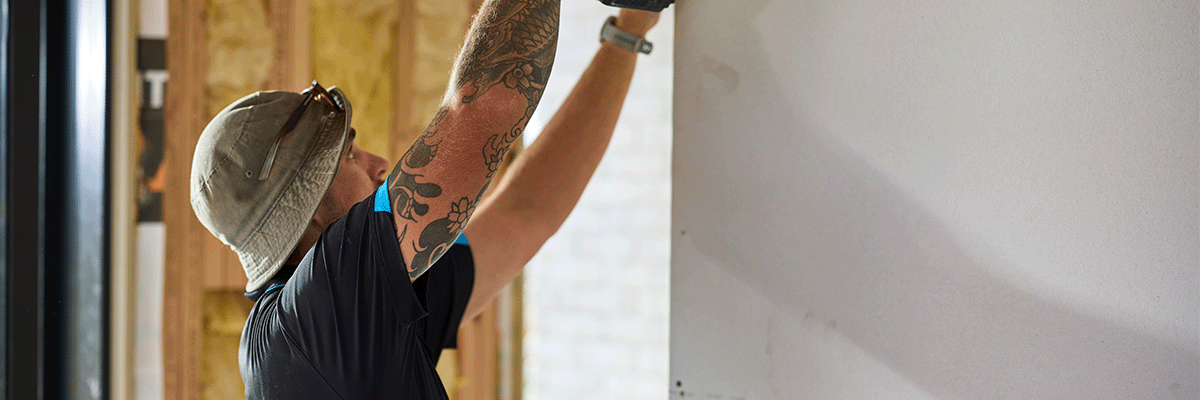
Once you’re ready to brace the walls and put up your interior lining, the first step is to ensure that any product you use, whether plasterboard, plywood or otherwise, is the right product for your build and its specific conditions.
In the popular GIB range, GIB Braceline and GIB Noiseline are suited for general residential builds, while products such as GIB Barrierline are suited for terrace houses, apartments and commercial builds where noise bleed should be avoided.
GIB’s handy System Selector tool asks for information about things such as fire resistance and soundproofing requirements to help choose the most appropriate plasterboard from its range. There’s also a useful Bracing Calculator for both timber and steel-framed buildings.
When bracing your building, it’s important to consider your external environment. If you’re building in a high wind zone, NZS 3604 requires a more durable bracing product like GIB Weatherline. There are also great plywood products designed for these purposes, such as the Ecoply Barrier range.
Don’t forget to match your flashing tape and other components to the type of bracing you’re using, so everything works together as a complete system. There’s little point having walls that are water-resistant if your tape is going to let moisture in round the edges.
In fact, avoiding moisture is a must in every part of the installation and storage process, as heat and damp can be the enemy of a perfect finish. Maintain a minimum inside temperature of 10˚C during the plasterboard fixing process and a controlled temperature of above 10˚C for 24 hours before, during and after joint stopping.
It’s also essential to have sufficient ventilation during the install to minimise internal humidity in concrete slab constructions (which increases the risk of plasterboard sagging and means joints take longer to dry). Finally, a crucial step for plasterboard installers before they get to work is checking that the pre-lining inspection has been done beforehand, and the timber moisture content does not exceed 18%.
In GIB’s own extensive Site Guide, there’s a checklist for every tradie, from the designer to the painter. Regardless of the system you’re using, following these steps can ensure you’re braced for success.


